Credit: Rex Lowe and Alison Sherwood
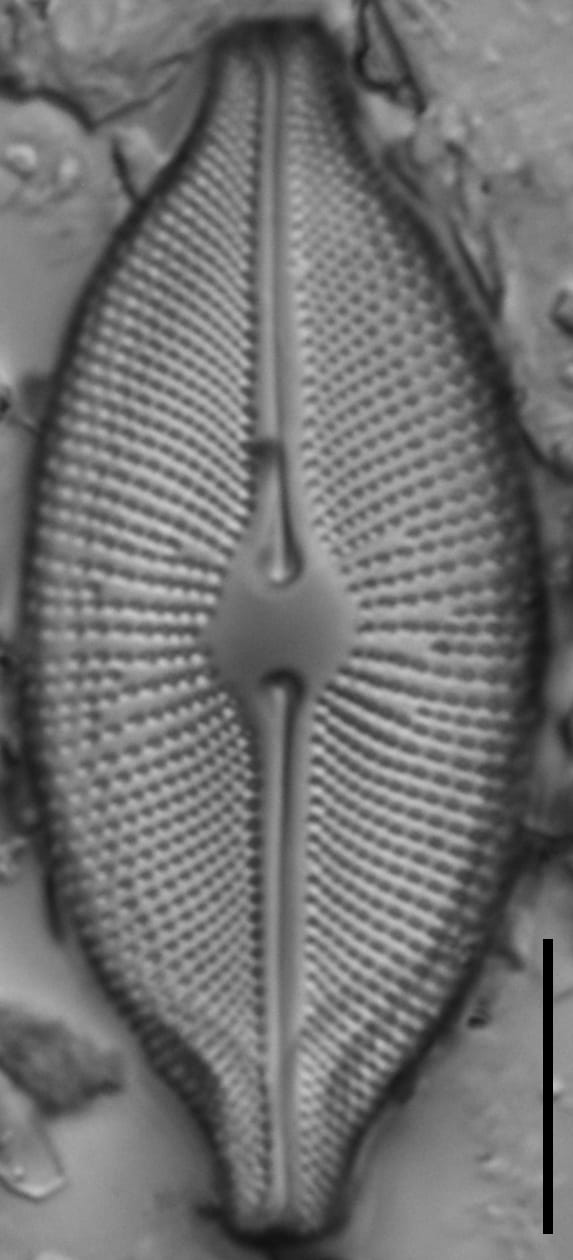
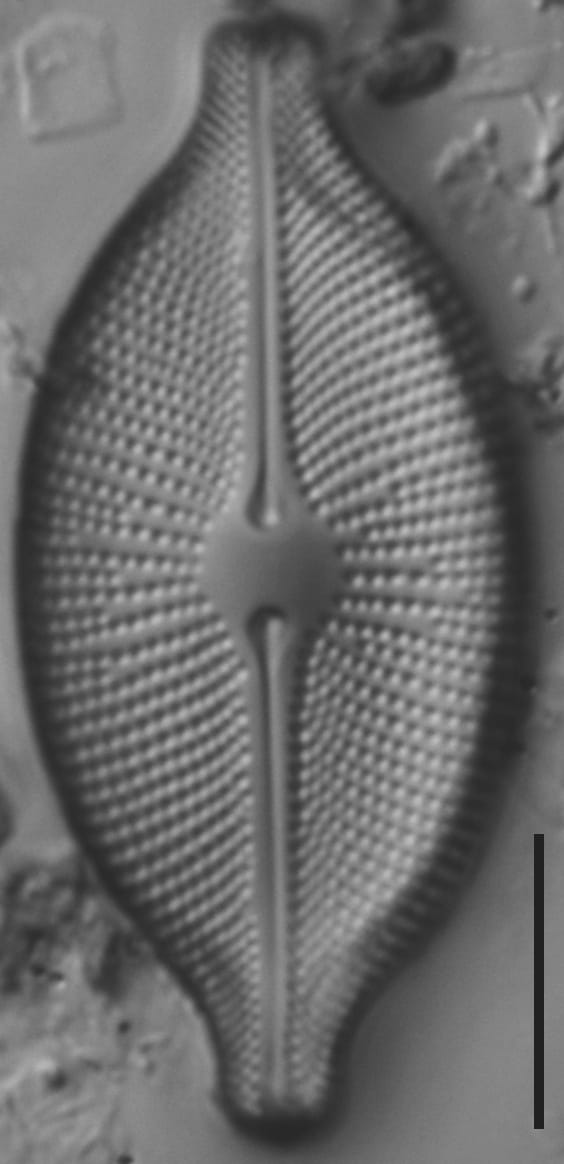
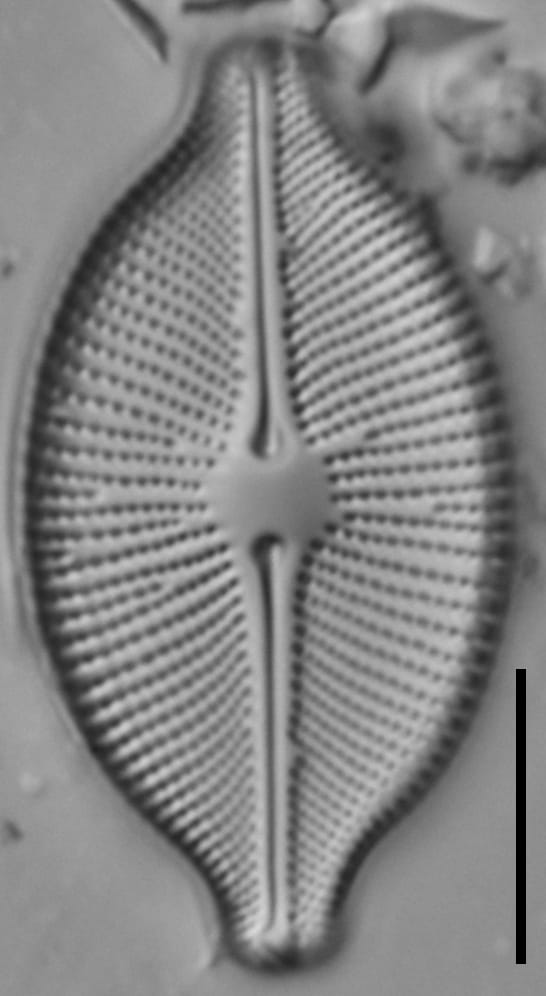
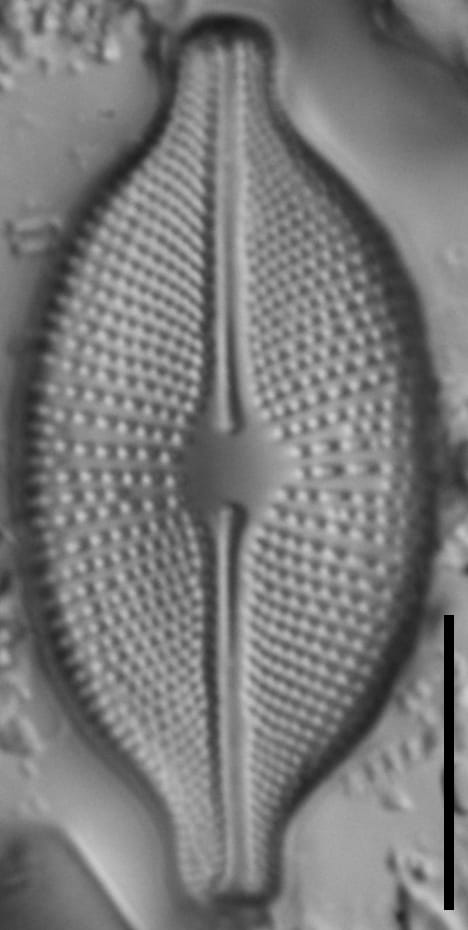
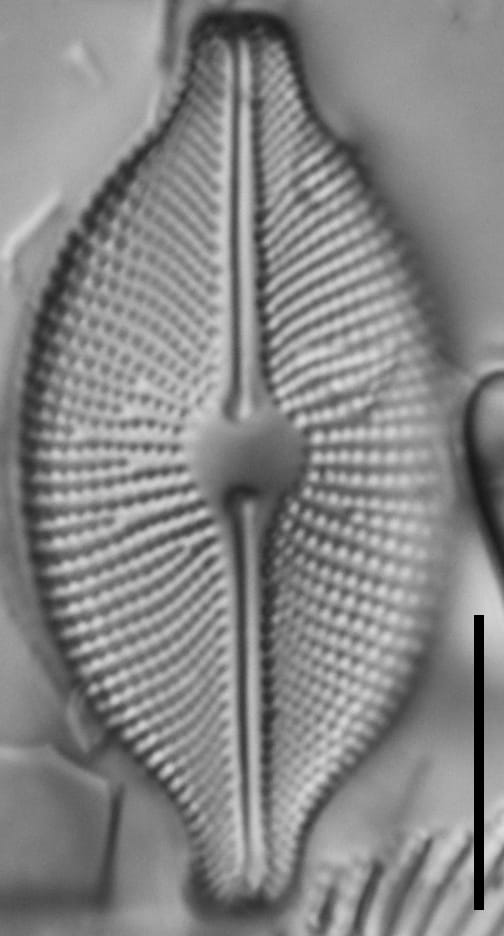
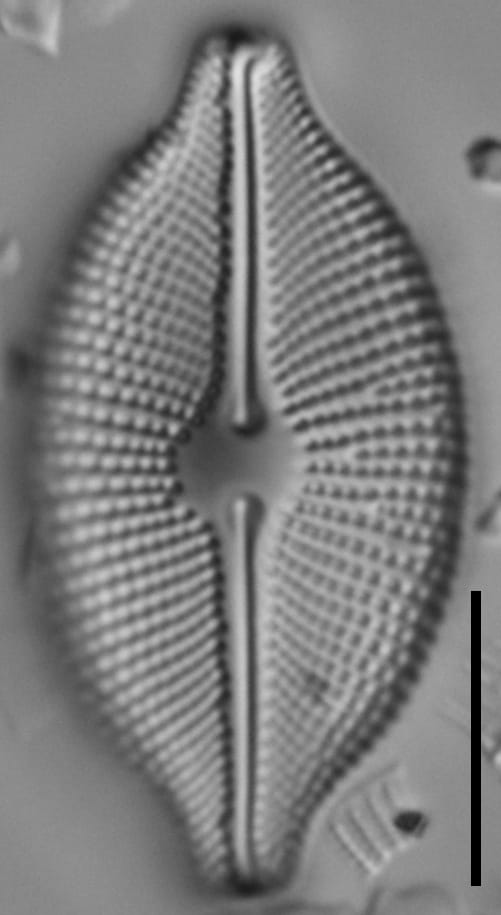
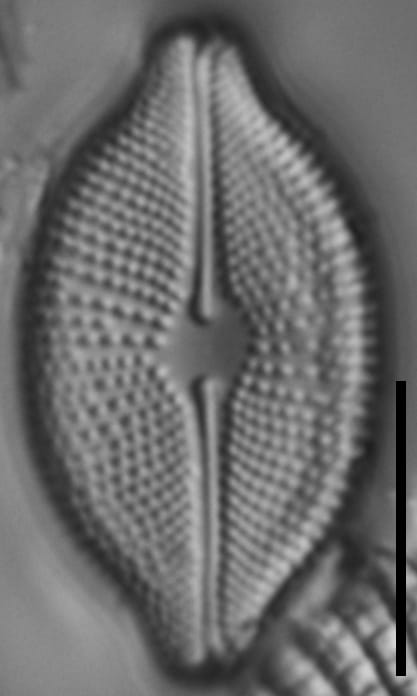
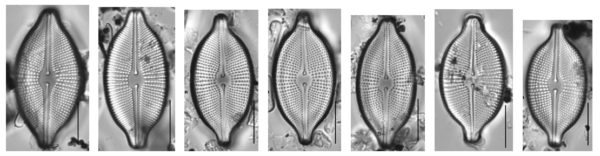
Size series of population from wet wall, Maui, Hawaii (ANSP GC20035). This taxon was described as C. citriformis, but later found to align within C. pusilla.

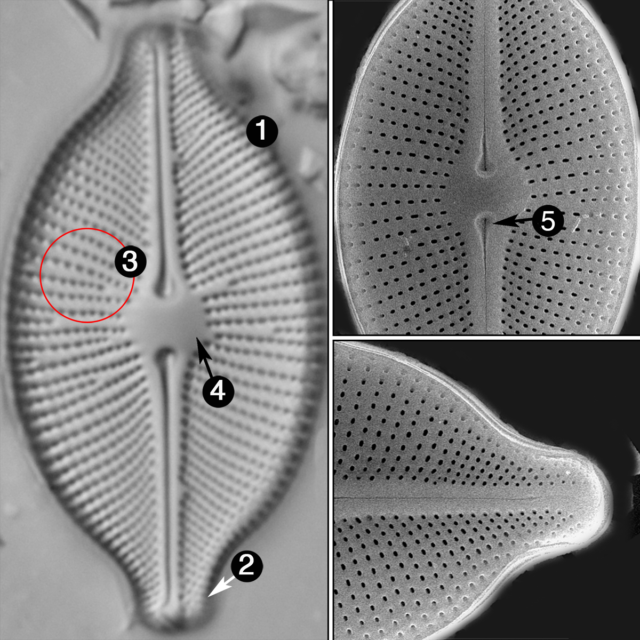
Valves are elliptic to elliptic-lanceolate with rostrate to capitate apices. The axial area is narrow, expanding to rounded central area. The raphe is straight with expanded external central endings and curved terminal fissures. Striae are punctate, radiate, and slightly curved. Shortened striae often occur in the middle of the valve. Areolae number 15-20 in 10 µm.
Note that C. citriformis is a heterotypic, or subjective, synonym of this taxon. A taxon page for C. citriformis was incorporated into this page, see UPDATE section.
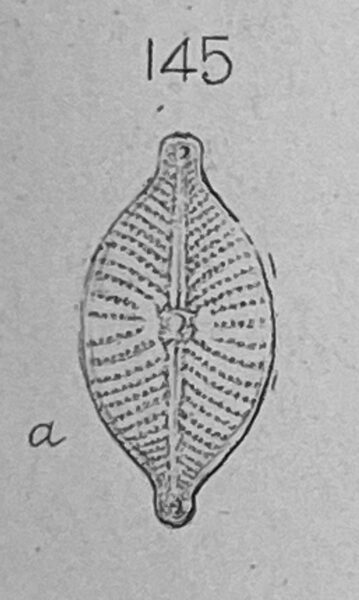
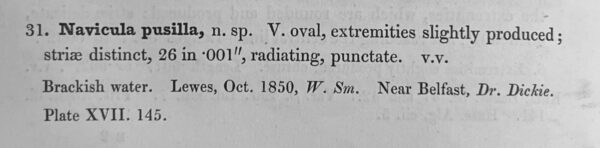
Cosmioneis pusilla is a common coastal diatom, mostly found in salt marshes and estuaries (Hendey 1964, Krammer and Lange-Bertalot 1986, Witkowski et al. 2000). It is also reported from subaerial habitats (Krammer and Lange-Bertalot 1986), for example under the name of C. citriformis from wet walls and waterfall spray zones in Hawaii (Lowe and Sherwood 2010). According to Hendey (1964), the type slide (BM23508) represents a sample from brackish water in Lewis, UK. Specimens shown on this page are from coastal salt marshes of New York and New Jersey.
Papadakis, C., Potapova, M. (2025). Cosmioneis pusilla. In Diatoms of North America. Retrieved October 10, 2026, from https://diatoms.org/species/61713/cosmioneis-pusilla
The 15 response plots show an environmental variable (x axis) against the relative abundance (y axis) of Cosmioneis pusilla from all the stream reaches where it was present. Note that the relative abundance scale is the same on each plot. Explanation of each environmental variable and units are as follows:
ELEVATION = stream reach elevation (meters)
STRAHLER = distribution plot of the Strahler Stream Order
SLOPE = stream reach gradient (degrees)
W1_HALL = an index that is a measure of streamside (riparian) human activity that ranges from 0 - 10, with a value of 0 indicating of minimal disturbance to a value of 10 indicating severe disturbance.
PHSTVL = pH measured in a sealed syringe sample (pH units)
log_COND = log concentration of specific conductivity (µS/cm)
log_PTL = log concentration of total phosphorus (µg/L)
log_NO3 = log concentration of nitrate (µeq/L)
log_DOC = log concentration of dissolved organic carbon (mg/L)
log_SIO2 = log concentration of silicon (mg/L)
log_NA = log concentration of sodium (µeq/L)
log_HCO3 = log concentration of the bicarbonate ion (µeq/L)
EMBED = percent of the stream substrate that is embedded by sand and fine sediment
log_TURBIDITY = log of turbidity, a measure of cloudiness of water, in nephelometric turbidity units (NTU).
DISTOT = an index of total human disturbance in the watershed that ranges from 1 - 100, with a value of 0 indicating of minimal disturbance to a value of 100 indicating severe disturbance.