Diatoms of North America
A supervolcano erupted near today’s Yellowstone National Park 11.86 mya. This was not a Mount St Helen’s type eruption, this was enormous! Volcanic ash blanketed much of what we now know as Montana, Wyoming, Colorado, Nebraska, and South Dakota in a layer that was up to one meter deep.
At that time, the region was a large savannah and home to horses, camels, rhinoceroses, bone-crushing dogs, and saber tooth cats. Just like you envision today’s African savannah, many of those animals lived in herds or family groups, and everyone had to find water to drink.
The ash covered everything and animals began to suffer the consequences of the ash. First lack of food and then developing a lung condition called Bamberger-Marie Disease or hypertrophic osteopathy; the ash was toxic in their lungs. Seeking relief, they began to congregate around watering holes.
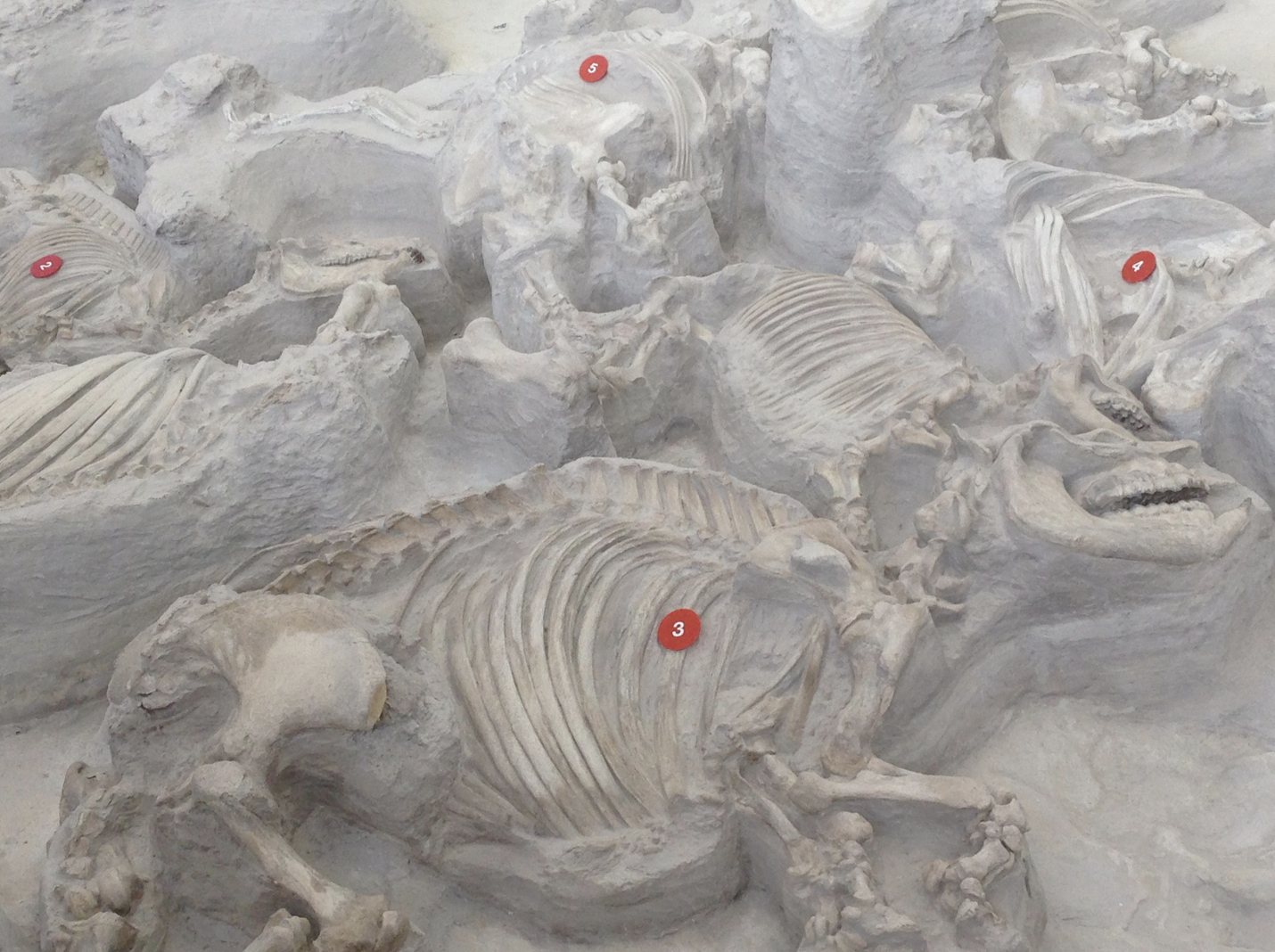
At Ashfall Fossil Beds Historical Park near Royal, Nebraska, one of these Miocene watering holes is preserved. The site was discovered in the early 1970s by paleontologist Dr. Mike Voorhies. Dr. Voorhies uncovered complete skeletons of rhinoceros families lying next to each other and quickly realized the site’s importance. As the fossil bed was excavated, the magnitude and solemnity of the site revealed itself. Death assemblages of animals were preserved in layers. The most quick to succumb—the birds and turtles—made up the bottom layers of the water hole. Next to succumb were horses and camels. The dozens of huge rhinoceroses succumbed more slowly and capped the “death chronosequence” (Fig. 1). Later bone crushing dogs fed on the dead animals before the site and the animals were completely covered in ash; the whole process from volcano eruption to complete burial may have taken only a few weeks to months!
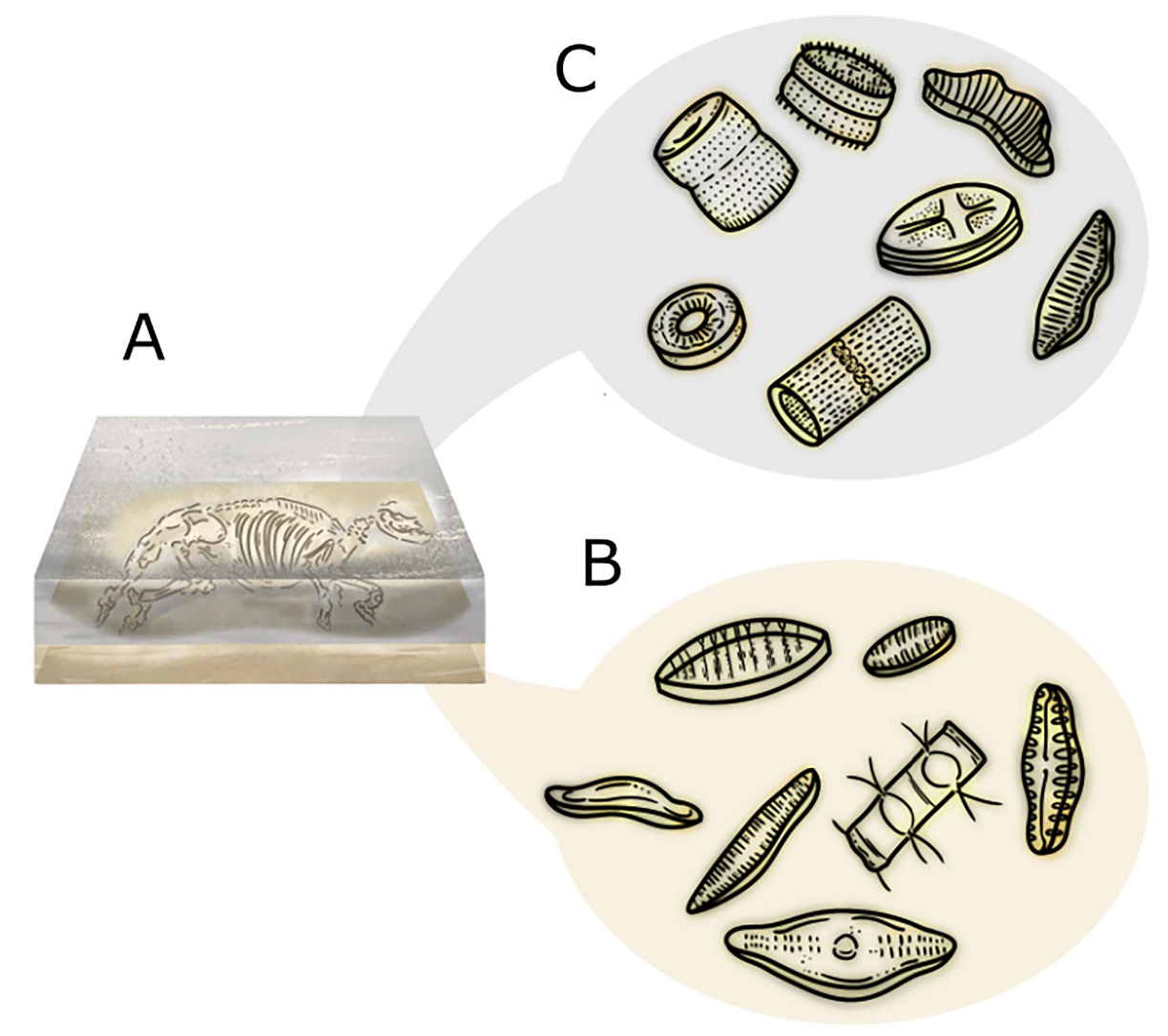
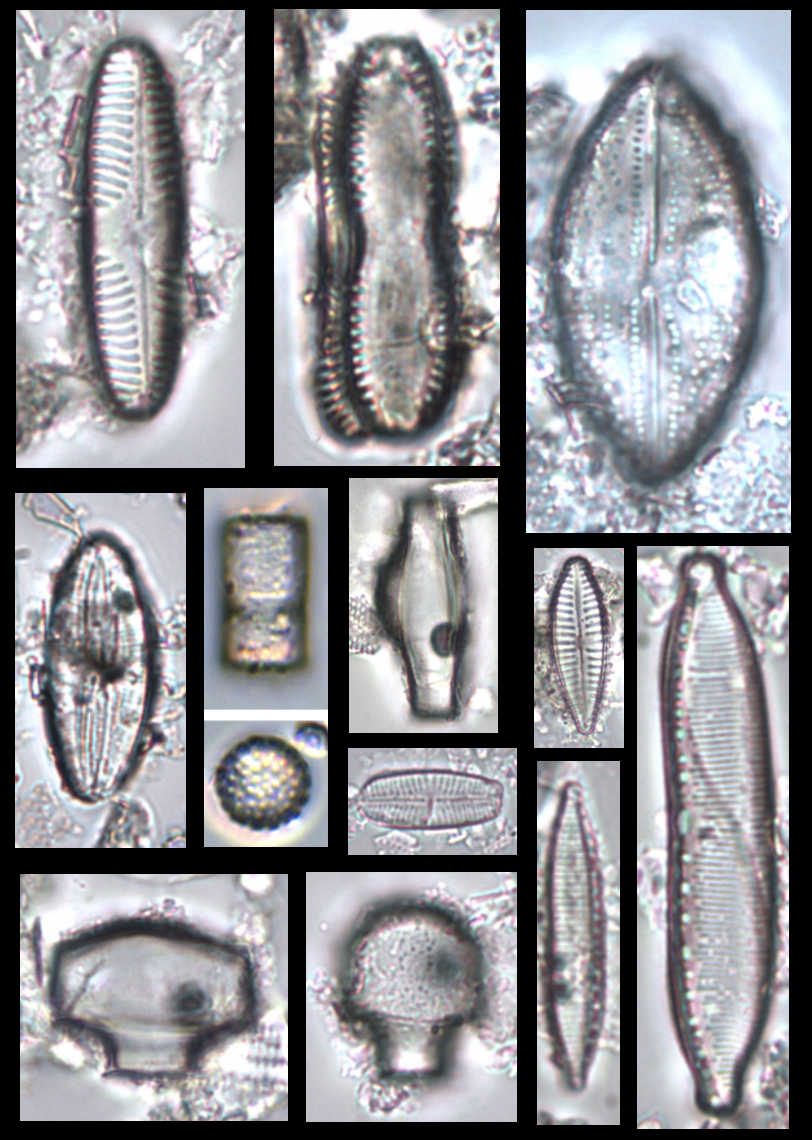
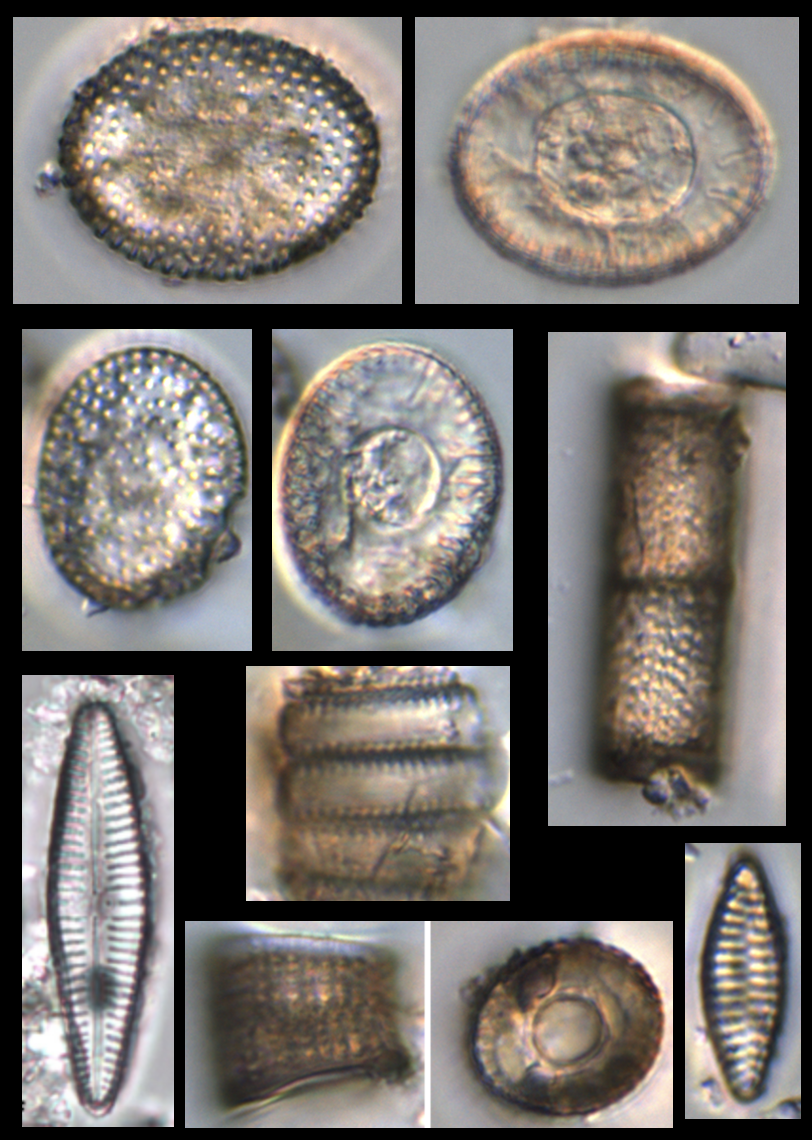
For many years, researchers questioned what the watering hole was like. Was it a lake or a pond or a river? Preserved alongside the skeletons were clues. Some were physical such as ripples in the sandy bottom suggesting the site had shallow water or features in the ash layers suggesting they had been reworked by flowing water. Other clues could only be seen under the microscope. The diatoms are a large group of microscopic algae found in every aquatic habitat. Diatom cells are surrounded by a biologically produced glass shell. Under the microscope the symmetry, size and patterns on the diatom shells allows us to identify each species. Diatoms also have known ecological preferences; when we look at a diatom community, we know something about what type of habitat it lived in. What could the Ashfall diatoms tell us about this unique fossil site (Fig 2)?
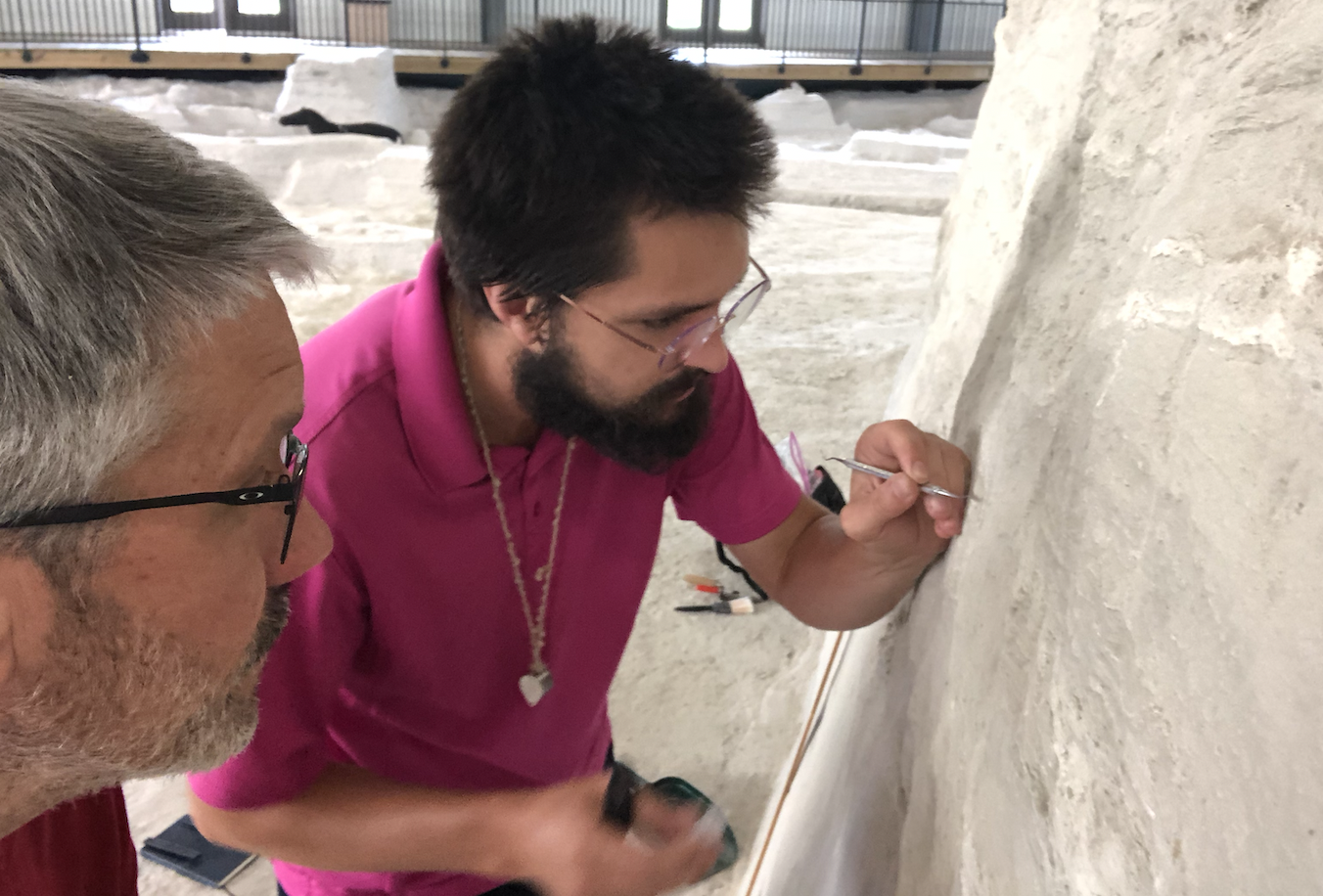
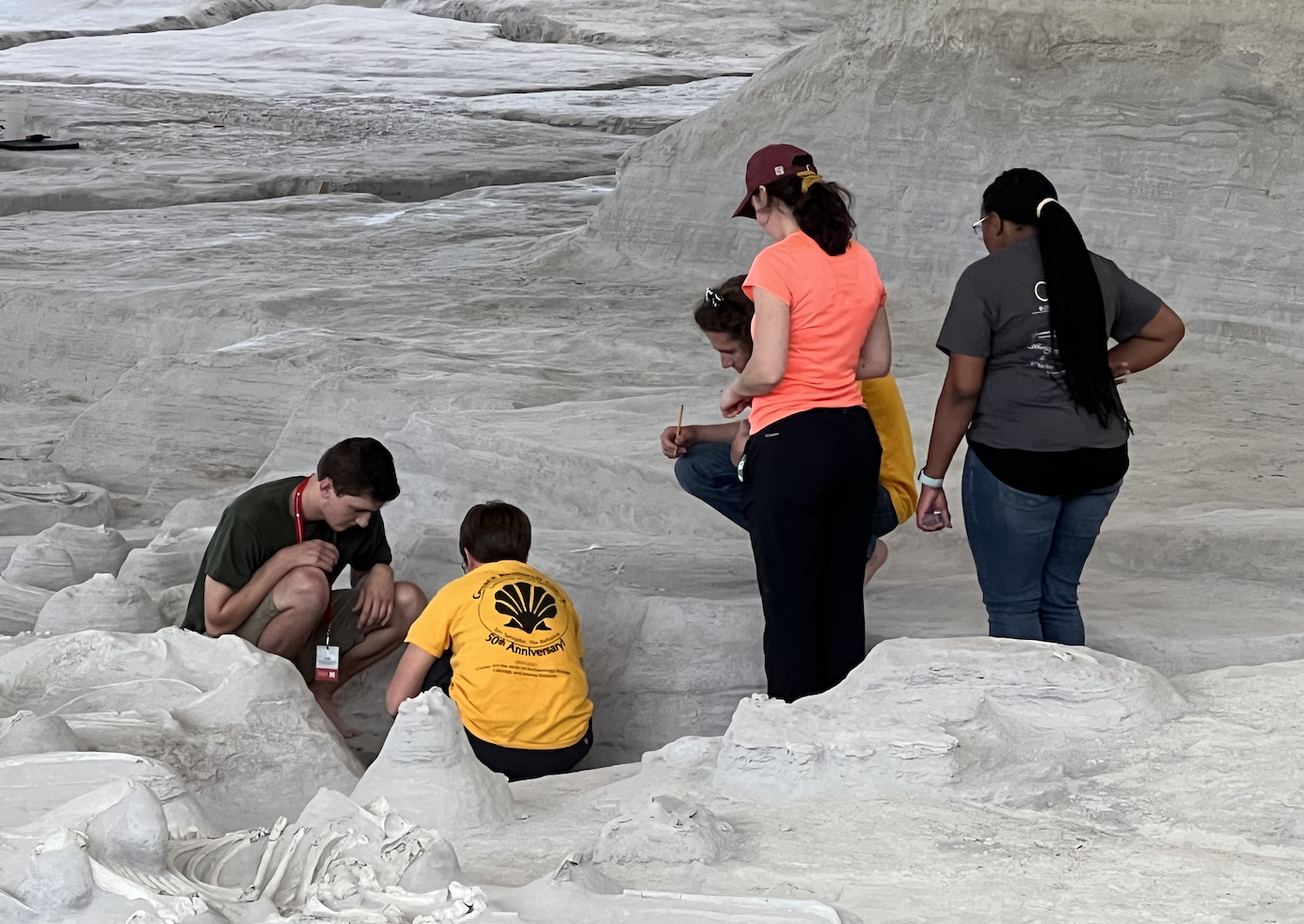
To answer that question, researchers from the Science Museum of Minnesota (Fig. 3), Indiana State University, University of California Irvine, and the Ashfall Fossil Beds partnered with students at Iowa Lakeside Laboratory’s summer Ecology and Systematics of Diatoms class and recently published their findings in the journal Palaios. For many summers, the classes made trips to the Ashfall site to sample its Miocene diatoms as the site was being excavated (Fig. 4). Research focused on diatoms in different layers at the site: the sand at the waterhole bottom, the multiple layers of ash that filled the waterhole, and other interesting finds like dog tracks and fossil aquatic plants.
The secrets of the waterhole emerged. Diatoms preserved in the sand were species tolerant of higher salinity and showed evidence of being able to survive drying (Fig. 5). The watering hole clearly dried out sometimes. The diatoms preserved in the ash layers were very different. They were species well-known from shallow lakes and ponds and tolerant of fresher waters and being regularly stirred up (Fig. 6), but might also be responding to known acid rain that follows volcanic eruptions. A picture emerged. The diatom evidence shows the Ashfall site was a seasonal watering hole and that the volcano that buried it erupted during the wet season. The watering hole was likely a floodplain or alluvial fan feature—a smallish pond left near a river bed or mouth after the rainy season where herds and family groups of grazing mammals came to drink—and the animals that hunted them came to hunt.
After a HUGE volcanic eruption that buried everything from turtles to rhinoceroses, it’s the tiny things that gave us key clues to decipher this amazing fossil deposit. A seasonal waterhole in a river floodplain that was in the wrong place at the wrong time exactly 11.86 million years ago!
Mohan, J., Edlund, M.B., Burge, D.R.L., Stone, J.R., Schlauch Saiyawong, J. and Otto, R.E. (2025) Diatom fossils from the Ashfall Fossil Beds indicate an alluvial mega-fan buried during the wet season by the Bruneau-Jarbidge eruption (~11.86 Ma). Palaios 40: 88-99.