
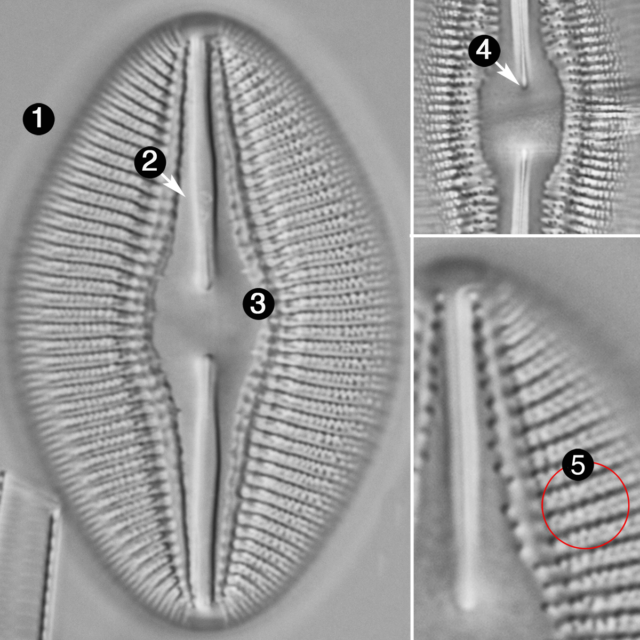
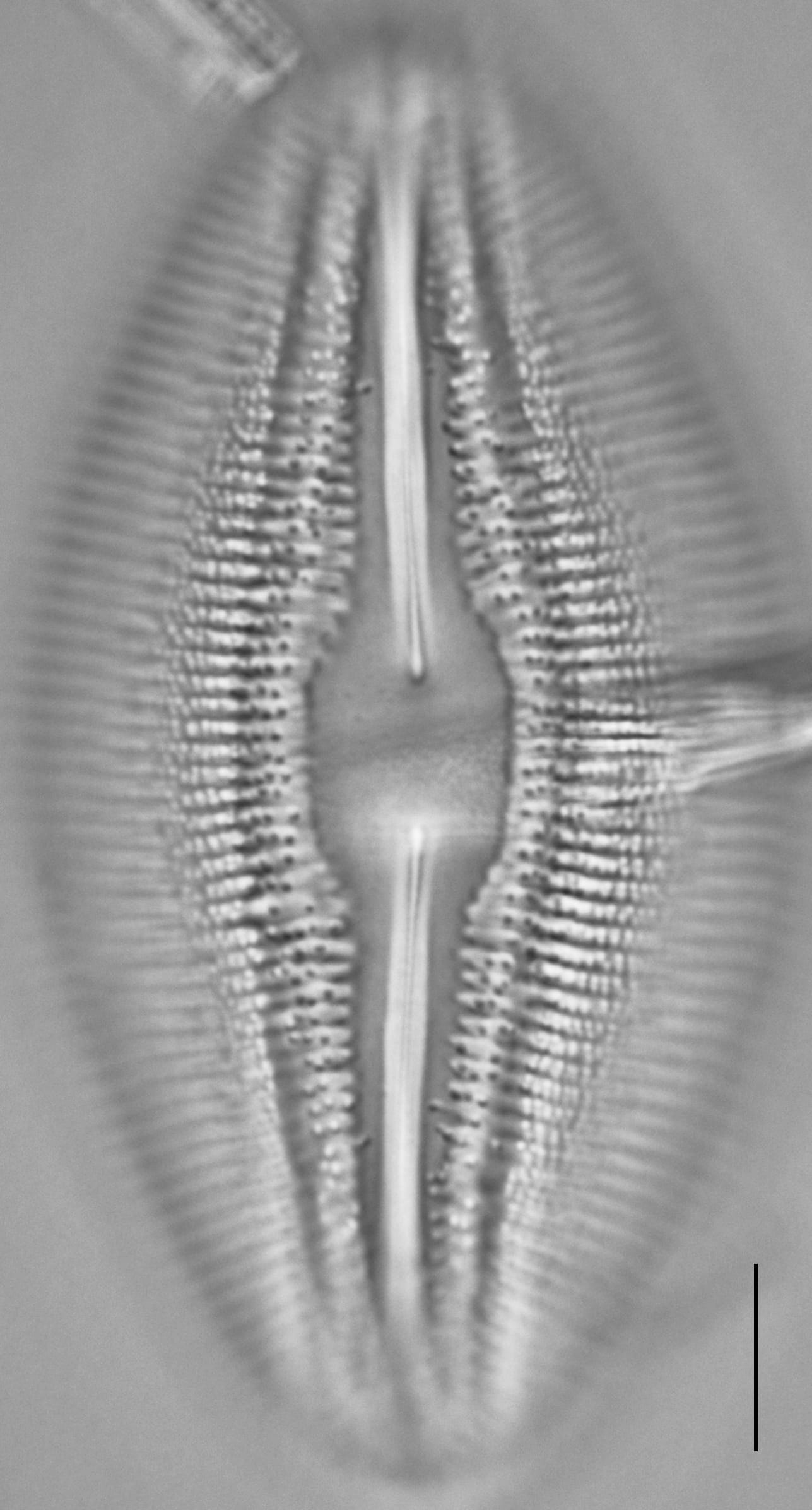
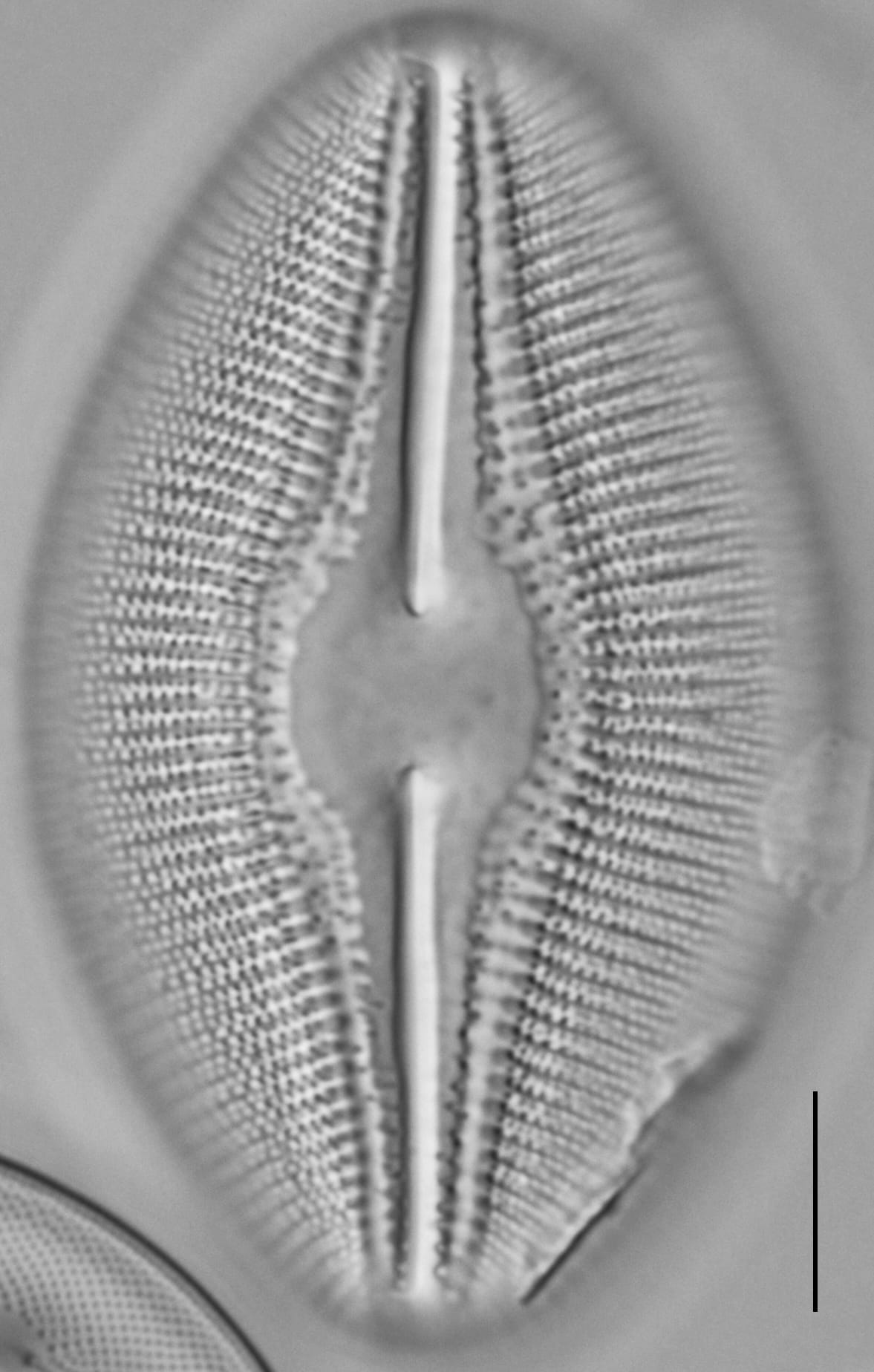
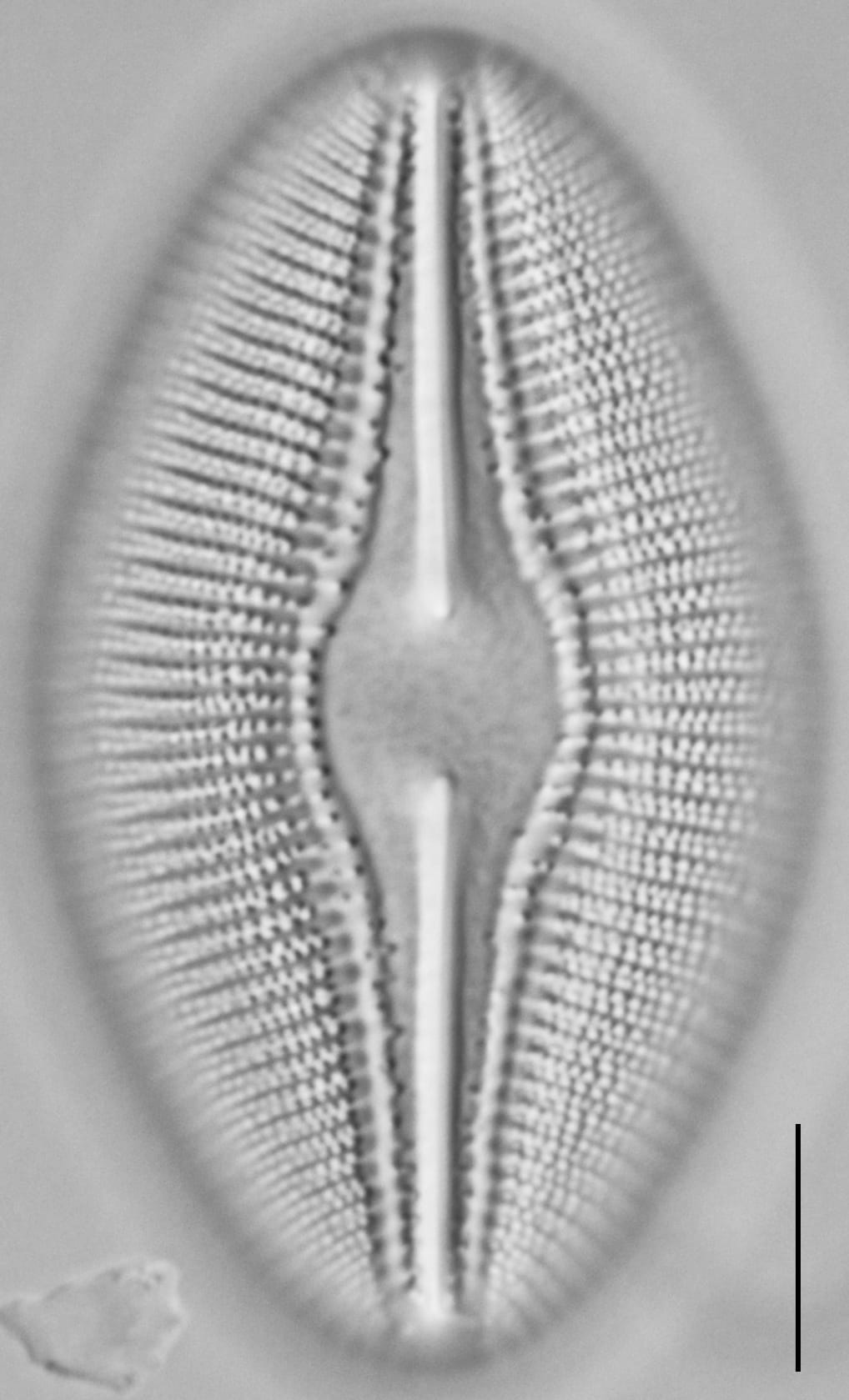
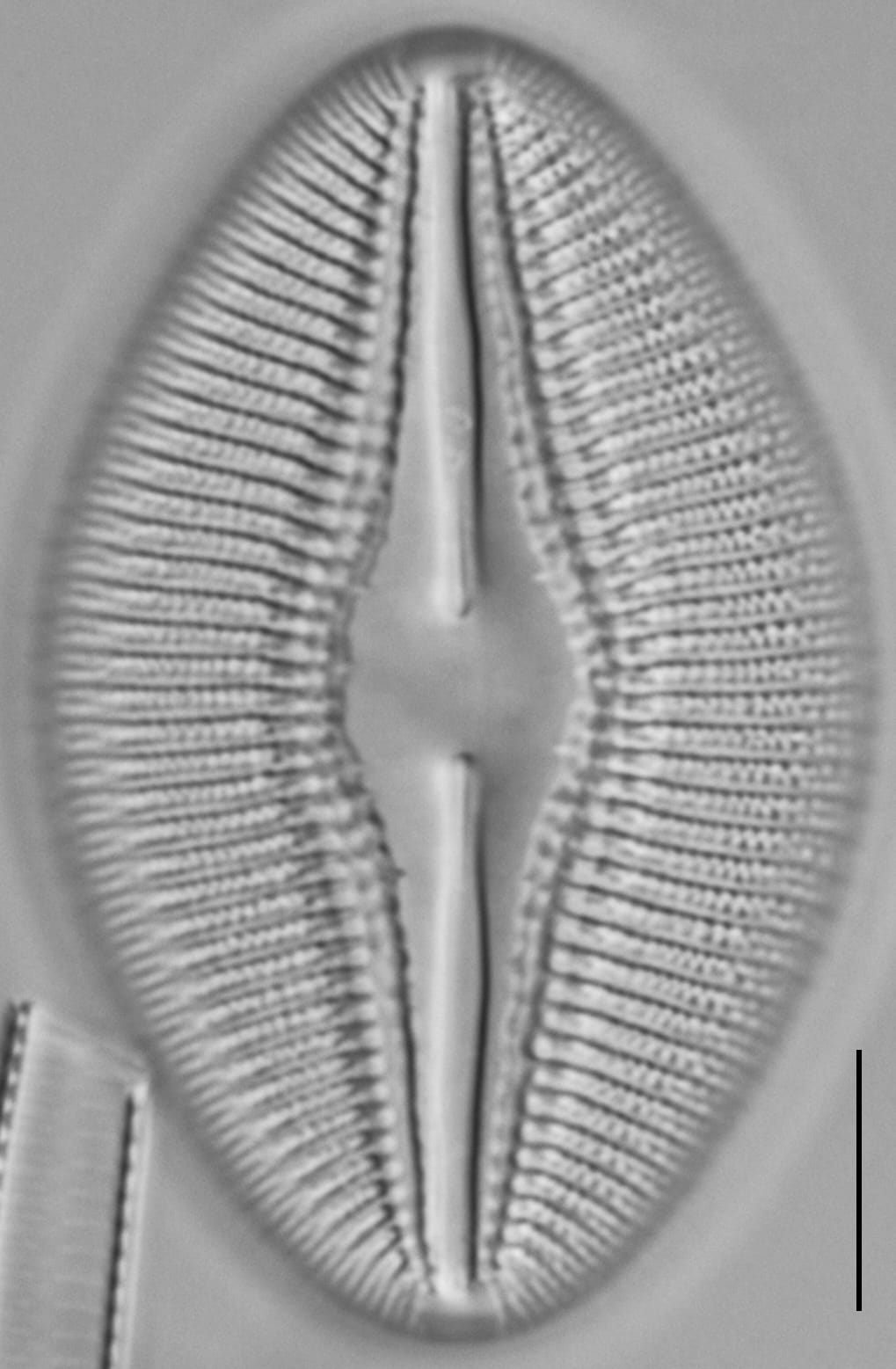
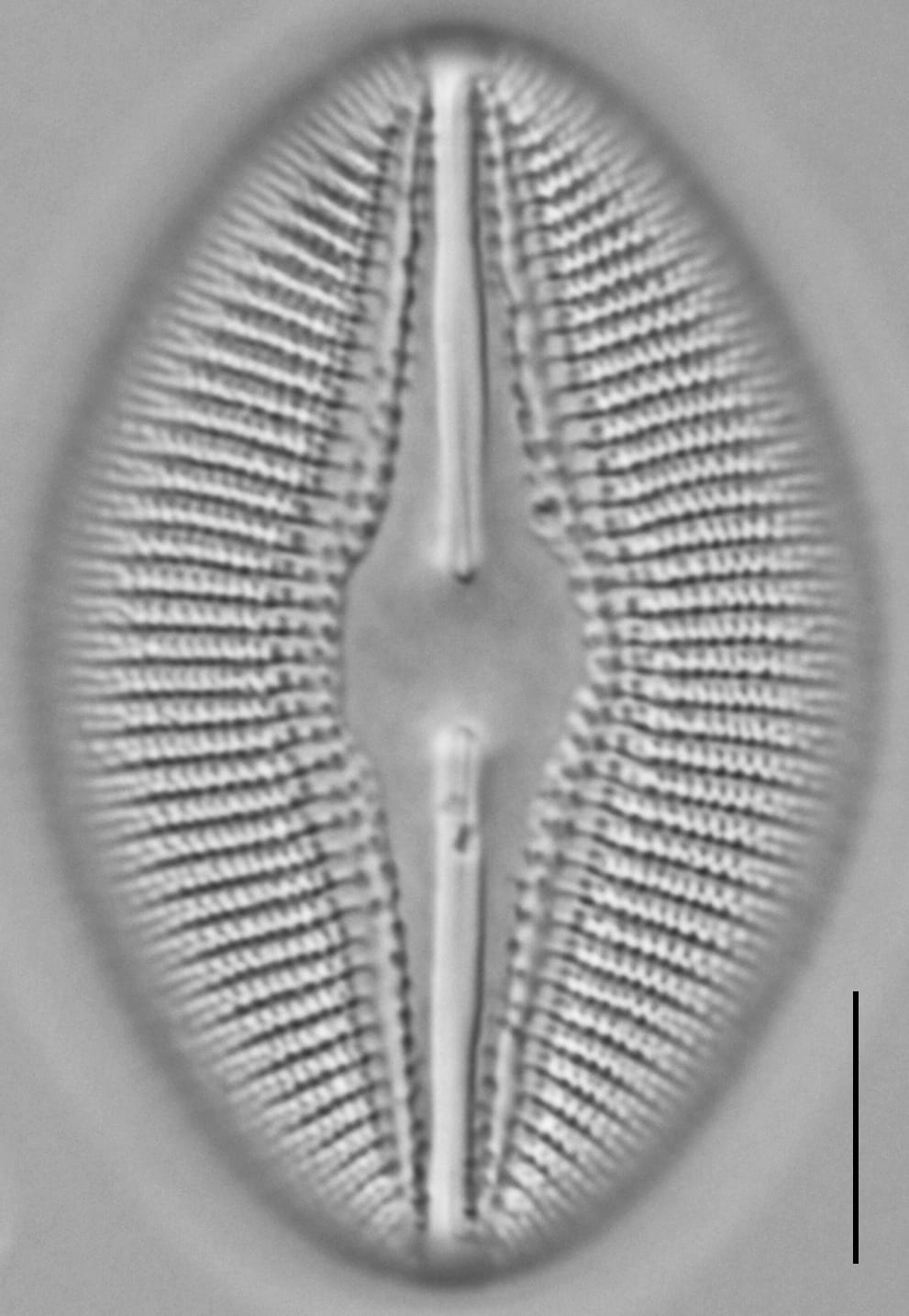
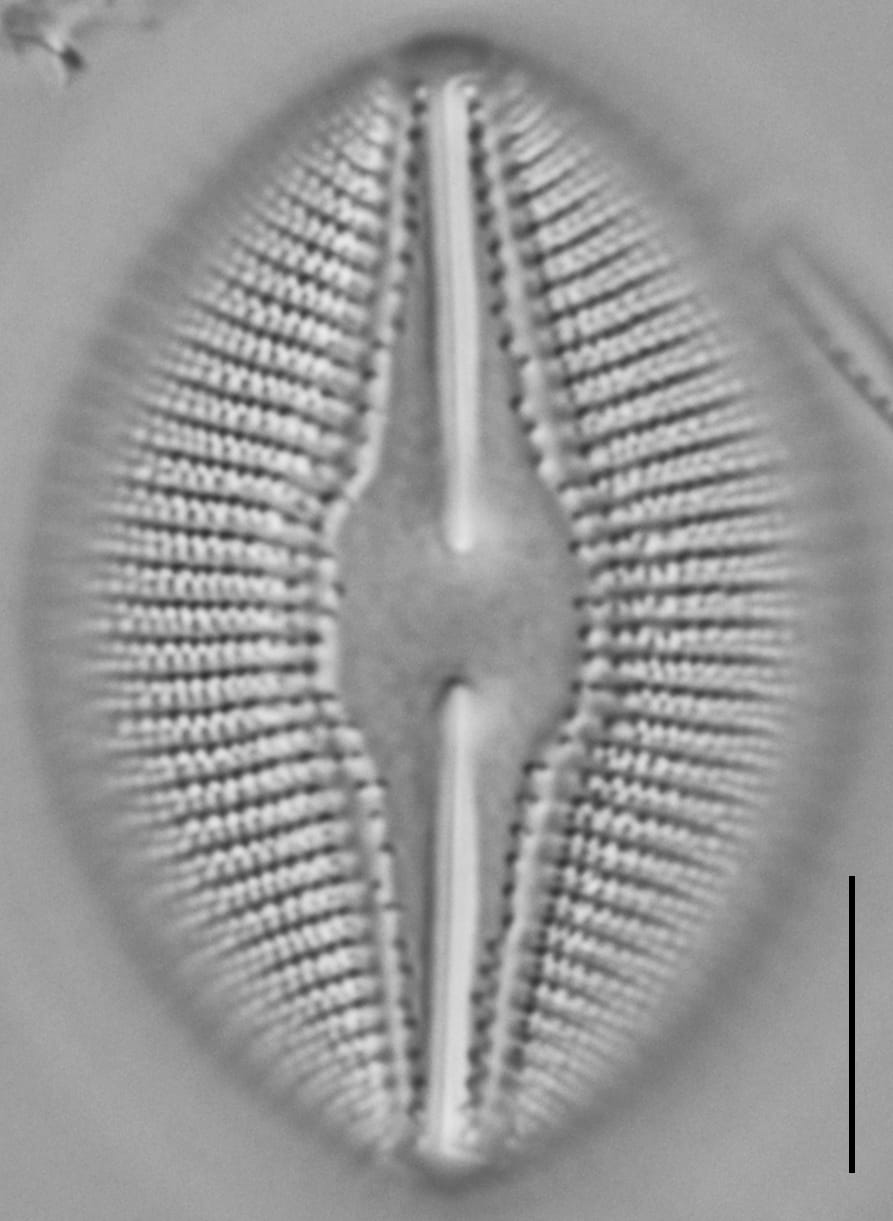
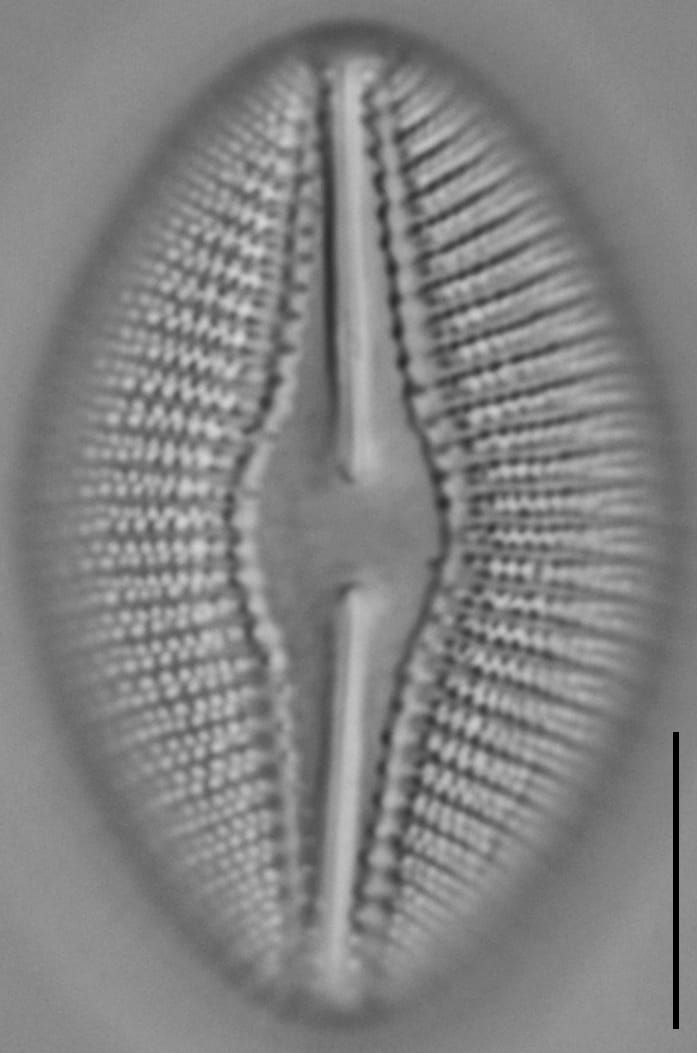
Valves are rhombo-elliptic, with a convex valve face such that the valve/mantle junction appears blurred when central part of valve face is in focus. The axial area is rhombic-lanceolate and widens into a slightly apically elongated elliptic or rectangular central area. Longitudinal canals are moderately narrow, especially in smaller valves and do not vary much in width except tapering toward the valve apices. The raphe is filiform and straight.
Proximal raphe ends are straight and very slightly expanded. Striae are radiate and biseriate and continue as one or two (in larger valves up to three) irregularly placed areolae along the canals. Areolae within striae are arranged in alternating pairs.
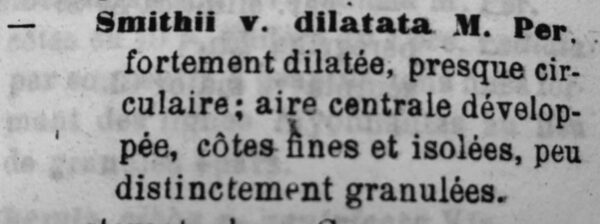
Diploneis dilatata was described from a spring in Fall Mountain, Connecticut (Tempère and Peragallo 1908) and specimens on this page are from the type material. Judging from the assemblage of the type material, dominated by Odonthidium mesodon, this was a cold-water spring. The only other documented record of this species is from Long Branch Creek, South Carolina (Camburn et al. 1978), where this taxon was most abundant in the epilithon.
Potapova, M. (2025). Diploneis dilatata. In Diatoms of North America. Retrieved October 14, 2026, from https://diatoms.org/species/61810/diploneis-dilatata
The 15 response plots show an environmental variable (x axis) against the relative abundance (y axis) of Diploneis dilatata from all the stream reaches where it was present. Note that the relative abundance scale is the same on each plot. Explanation of each environmental variable and units are as follows:
ELEVATION = stream reach elevation (meters)
STRAHLER = distribution plot of the Strahler Stream Order
SLOPE = stream reach gradient (degrees)
W1_HALL = an index that is a measure of streamside (riparian) human activity that ranges from 0 - 10, with a value of 0 indicating of minimal disturbance to a value of 10 indicating severe disturbance.
PHSTVL = pH measured in a sealed syringe sample (pH units)
log_COND = log concentration of specific conductivity (µS/cm)
log_PTL = log concentration of total phosphorus (µg/L)
log_NO3 = log concentration of nitrate (µeq/L)
log_DOC = log concentration of dissolved organic carbon (mg/L)
log_SIO2 = log concentration of silicon (mg/L)
log_NA = log concentration of sodium (µeq/L)
log_HCO3 = log concentration of the bicarbonate ion (µeq/L)
EMBED = percent of the stream substrate that is embedded by sand and fine sediment
log_TURBIDITY = log of turbidity, a measure of cloudiness of water, in nephelometric turbidity units (NTU).
DISTOT = an index of total human disturbance in the watershed that ranges from 1 - 100, with a value of 0 indicating of minimal disturbance to a value of 100 indicating severe disturbance.